














Informe sobre submissões incompletas


Antes de submeterem o manuscrito, solicitamos aos autores que realizem a leitura minuciosa das instruções disponibilizadas a seguir e que realizem as adequações necessárias.
Checklist para submissão |PT|
O artigo deverá destinar-se exclusivamente à Cogitare Enfermagem, não devendo ser submetido a outro periódico, será publicado na íntegra, obrigatoriamente em português, inglês e espanhol.
O número máximo de autores está limitado a 7 (sete), solicitações de exceção serão analisadas pelo Editor Chefe. Os autores são responsáveis por declarar conflitos de interesse, apoio financeiro, técnico, institucional ou pessoal, relacionados ao estudo, e por agradecimentos.
O artigo não poderá ter a identificação dos autores, esta identificação deverá estar somente na página de identificação.
As palavras “HIGHLIGHTS”, “RESUMO”, “DESCRITORES”, “INTRODUÇÃO”, “MÉTODO”, “RESULTADOS”, “DISCUSSÃO”, “CONSIDERAÇÕES FINAIS/CONCLUSÃO”, “REFERÊNCIAS” e demais que iniciam as seções do corpo do artigo devem ser digitadas em CAIXA ALTA, NEGRITO E ALINHADAS À ESQUERDA.
Esta etapa é destinada para que os autores identifiquem os Highlights ou, os principais resultados e conclusões do seu artigo. Portanto, devem ser elaboradas de três a quatro pequenas frases, com até 10 palavras em cada uma delas, que demonstrem a principal contribuição do estudo. Cada frase deverá ter no máximo 75 caracteres.
Exemplo:
DESCRITORES: Educação; Cuidados de Enfermagem; Aprendizagem; Enfermagem; Ensino.
Deverá conter justificativa, fundamentação teórica e objetivos. A justificativa deve definir claramente o problema, destacando sua importância, lacunas do conhecimento, e o referencial teórico utilizado quando aplicável.
Exemplo: “Dos 100 participantes, 15 (15%) referiram melhora do quadro e seis (6%) referiram piora”.
Apresentação de aspectos relevantes e interpretação dos dados obtidos. Relação e discussão com resultados de pesquisas, implicações e limitações do estudo. Não devem ser reapresentados dados que constem nos resultados.
Destacar os achados mais importantes, comentar as contribuições para área; Fundamentadas nos objetivos, resultados e discussão, evitando afirmações não relacionadas ao estudo e/ou novas interpretações. Incluir as contribuições do estudo realizado.
Nesta seção os agradecimenos devem se limitar a instituições, financiadores ou organizações que de alguma forma contribuíram para a realização do estudo.
Não se aplica agradecer a pessoas ou autores que colaboraram na pesquisa.
Agradecimentos, apoio financeiro ou técnico, declaração de conflito de interesse financeiro e/ou de afiliações:
É responsabilidade dos autores as informações e autorizações relativas aos itens mencionados acima. Citar o número do edital ao qual a pesquisa está vinculada. Em virtude da Portaria CAPES 206, de 4 de setembro de 2018, que dispõe sobre a obrigatoriedade de citação da CAPES, solicitamos a todos os autores que informem o recebimento de auxílio à pesquisa em todos os artigos submetidos. A partir desta data, os autores devem fazer referência ao apoio recebido que decorram de atividades financiadas pela CAPES, integral ou parcialmente.
As referências devem ser numeradas consecutivamente na ordem em que aparecem no texto pela primeira vez, e apresentadas de acordo com o Estilo Vancouver.
Para exemplos de referências nesse formato, consulte:
Samples of Formatted References for Authors of Journal Articles: https://www.nlm.nih.gov/bsd/uniform_requirements.html
Citing Medicine, 2ª edición https://www.ncbi.nlm.nih.gov/books/NBK7256/
ANEXOS
Os anexos, quando indispensáveis, devem ser citados no texto e inseridos após as referências.
Exemplo: Tabela 2, Quadro 1, Figura 3.
A fonte das informações da ilustração, quando resultante de outra pesquisa, deve ser citada e constar nas referências.
O cabeçalho e as fontes (quando houver) devem ser escritos em fonte Times New Roman, tamanho 12, com espaçamento simples entre as linhas;
Deve ser inserida o mais próximo possível do texto.
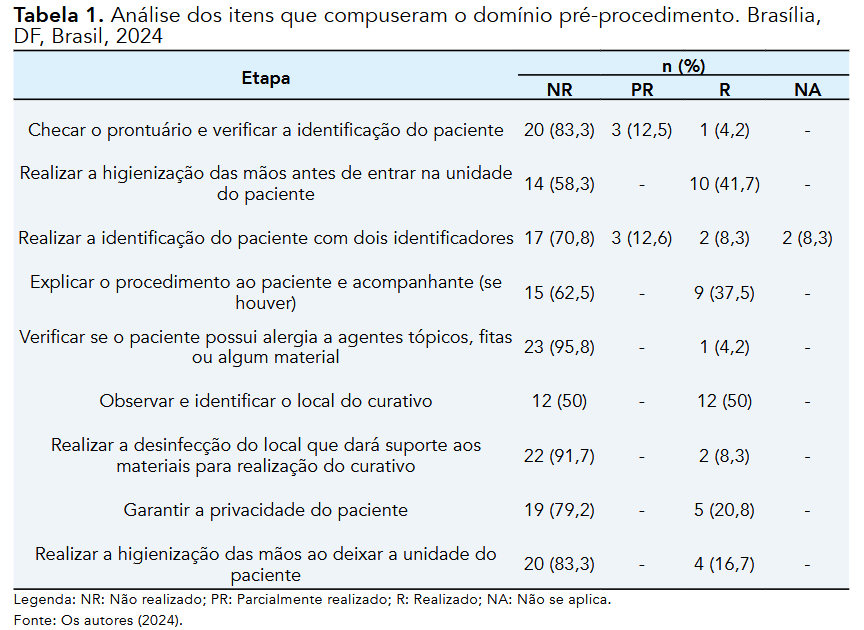
TABELAS
Exemplo:
QUADROS
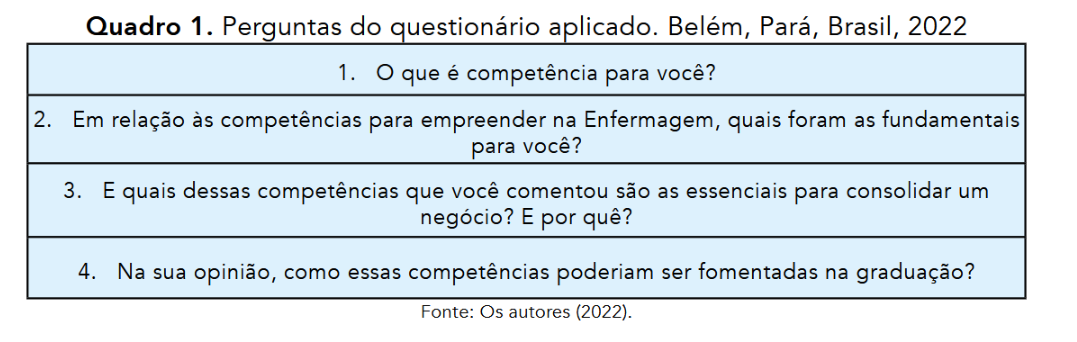
Após o enunciado do título do quadro, deve-se incluir nome da cidade, estado, país e ano, conforme exemplo abaixo. A fonte deve ser indicada abaixo e também deve ser centralizada.
Exemplo:
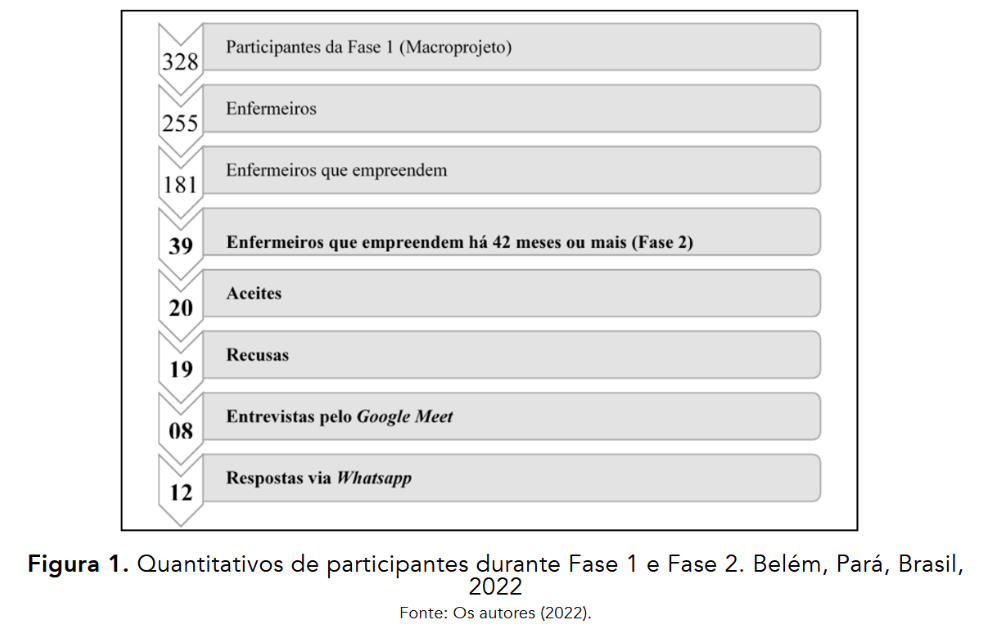
FIGURAS (Gráficos, Diagramas, Fotos)
Exemplo:
1) Citação indireta ou paráfrase
Informar o número da referência imediatamente ao término do texto, sem espaço e antes do sinal gráfico.
Exemplo:
O enfermeiro contribui para a prevenção de condições incapacitantes1.
2) Citação sequencial/intercalada
Separar os números de cada referência por traço, quando for sequencial.
Exemplo:
8-10 - a informação refere que as referências 8, 9 e 10 estão inclusas.
Separar os números de cada referência por vírgula, quando for intercalada.
Exemplo:
8,10 - a informação refere que as referências 8 e 10 estão inclusas.
3) Citação direta com até três linhas
Inserida no corpo do parágrafo e entre aspas. O número e página correspondentes à citação literal devem constar sobrescritos, entre parênteses e separados por dois pontos.
Exemplo:
8:13 - a informação se refere à referência 8, página 13.
4) Citação direta com mais de três linhas
Constar em novo parágrafo, justificado à direita e com recuo de 4 cm da margem esquerda, digitada em fonte Times New Roman 10, espaço simples entre linhas, sem aspas.
O número e página correspondentes à citação direta devem constar sobrescritos e separados por dois pontos.
Exemplo:
8:345-6 - o número 8 se refere à referência e o 345-9 às páginas.
5) Depoimento
A transliteração de depoimento deverá constar em novo parágrafo, digitada em fonte Times New Roman 12, itálico, com espaçamento simples entre linhas, sem aspas.
Comentários do autor devem estar entre colchetes e sem itálico.
A identificação do sujeito deve ser codificada (explicar a codificação na metodologia), entre parênteses, sem itálico e separada do depoimento por ponto.
Exemplo: [Comunicação] é você expressar algo, dizer alguma coisa a alguém é o ato de se comunicar […]. (Familiar 2).
Registro do Digital Object Identifier (DOI)
Os números DOI atribuídos aos artigos e editoriais publicados serão ativados somente após a publicação dos textos na Coleção SciELO Brasil.


Em caso de dúvidas técnicas, entre em contato através do e-mail: cogitare@ufpr.br
ISSN 1414-8536 - Versão impressa (para edições publicadas até 2014)
ISSN 2176-9133 - Versão eletrônica
______________________________________________________________________________________
Av. Prefeito Lothário Meissner, 632, Jardim Botânico | 80210-170 | Curitiba - PR
Tel.: (041) 3361-3755 | E-mail: cogitare@ufpr.br