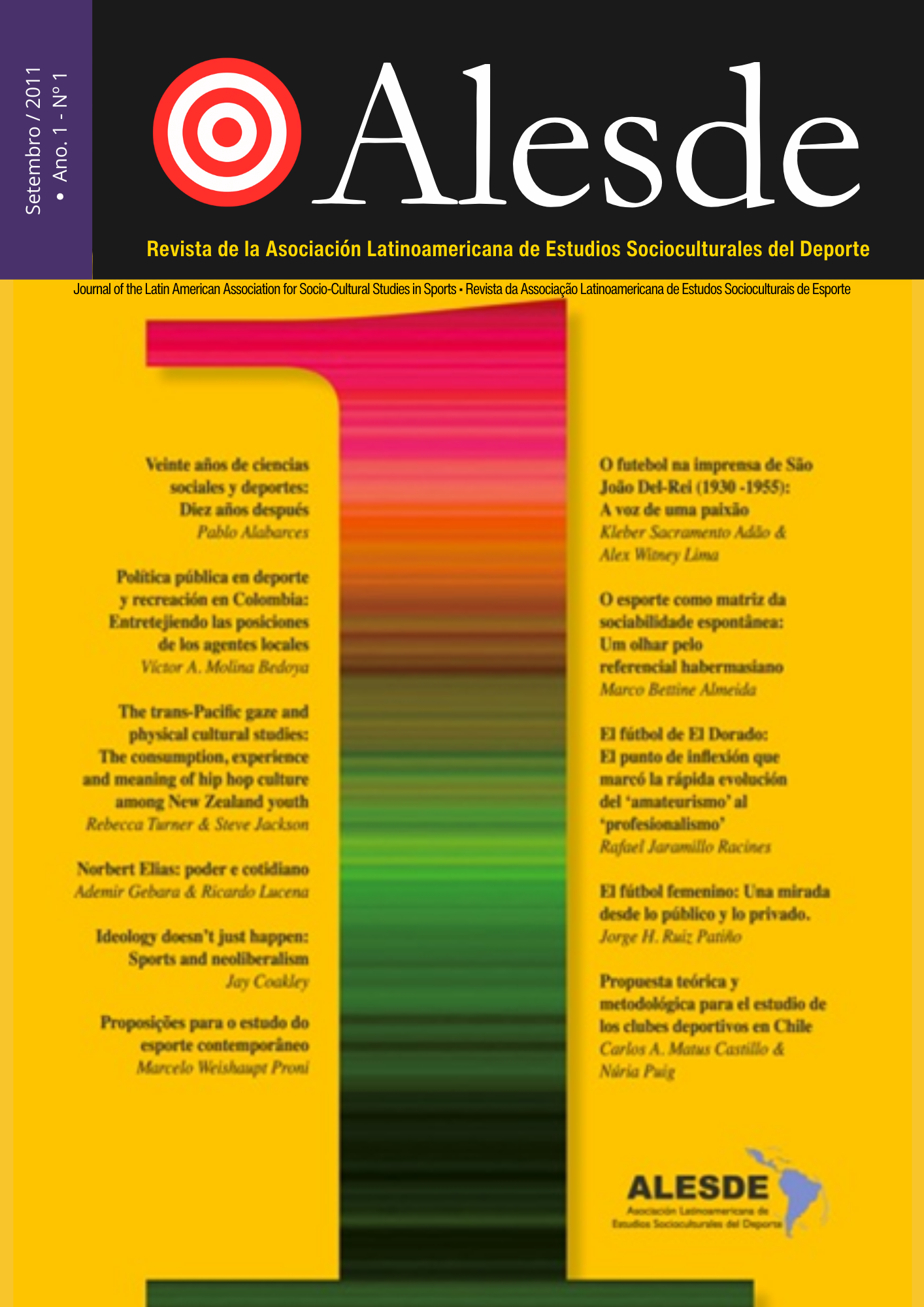
O olhar Trans-Pacífico e os Estudos da Cultura Física: Consumo, experiência e significado da cultura do hip-hop entre a juventude neozelandesa
DOI:
https://doi.org/10.5380/alesde.v1i1.22600Resumo
As recentes análises acadêmicas da popularidade global do hip hop tem focado no seu papel em definir e expressar formas particulares de identidade. Entretanto, coincidindo com esse interesse estão as preocupações tanto de acadêmicos quanto políticos sobre aspectos específicos de alguns hip hop tem sido descritos como sendo: “materialista, misógino, homofóbico, racista, vulgar e violento” (Chang, 2007: 58). Consequentemente, visões públicas influenciadas pela mídia e por políticos tem levantado preocupações e até culpa direta ao hip hop por problemas sociais como gangues, atitudes negativas contra as mulheres e crime violento. Assim, temos uma forma popular global de cultura física que pode ser elemento chave da identidade e estilos de vida dos jovens contemporâneos; mas cada um tem também rotulado não apenas como uma ameaça, mas um potencial perigo para a sociedade. Raramente são os pontos positivos reconhecidos, particularmente aqueles que fazem parte de programas para jovens. Esse estudo examina como a cultura hip hop global/americana tem se manifestado na cultura jovem da Nova Zelândia, incluindo como ela influencia na aparência, comportamento, atividade física, esporte, moda, consumo e educação. A questão mais ampla dessa pesquisa se foca em: como a juventude da Nova Zelândia define, consome e dá sentido a cultura hip hop?
Downloads
Publicado
Como Citar
Edição
Seção
Licença
Autores que publicam nesta revista concordam com os seguintes termos:- Autores mantém os direitos autorais e concedem à revista o direito de primeira publicação, com o trabalho simultaneamente licenciado sob a Creative Commons Attribution License que permitindo o compartilhamento do trabalho com reconhecimento da autoria do trabalho e publicação inicial nesta revista.
- Autores têm autorização para assumir contratos adicionais separadamente, para distribuição não-exclusiva da versão do trabalho publicada nesta revista (ex.: publicar em repositório institucional ou como capítulo de livro), com reconhecimento de autoria e publicação inicial nesta revista.
- Autores têm permissão e são estimulados a publicar e distribuir seu trabalho online (ex.: em repositórios institucionais ou na sua página pessoal) após o processo editorial, já que isso pode gerar alterações produtivas, bem como aumentar o impacto e a citação do trabalho publicado (Veja O Efeito do Acesso Livre).