
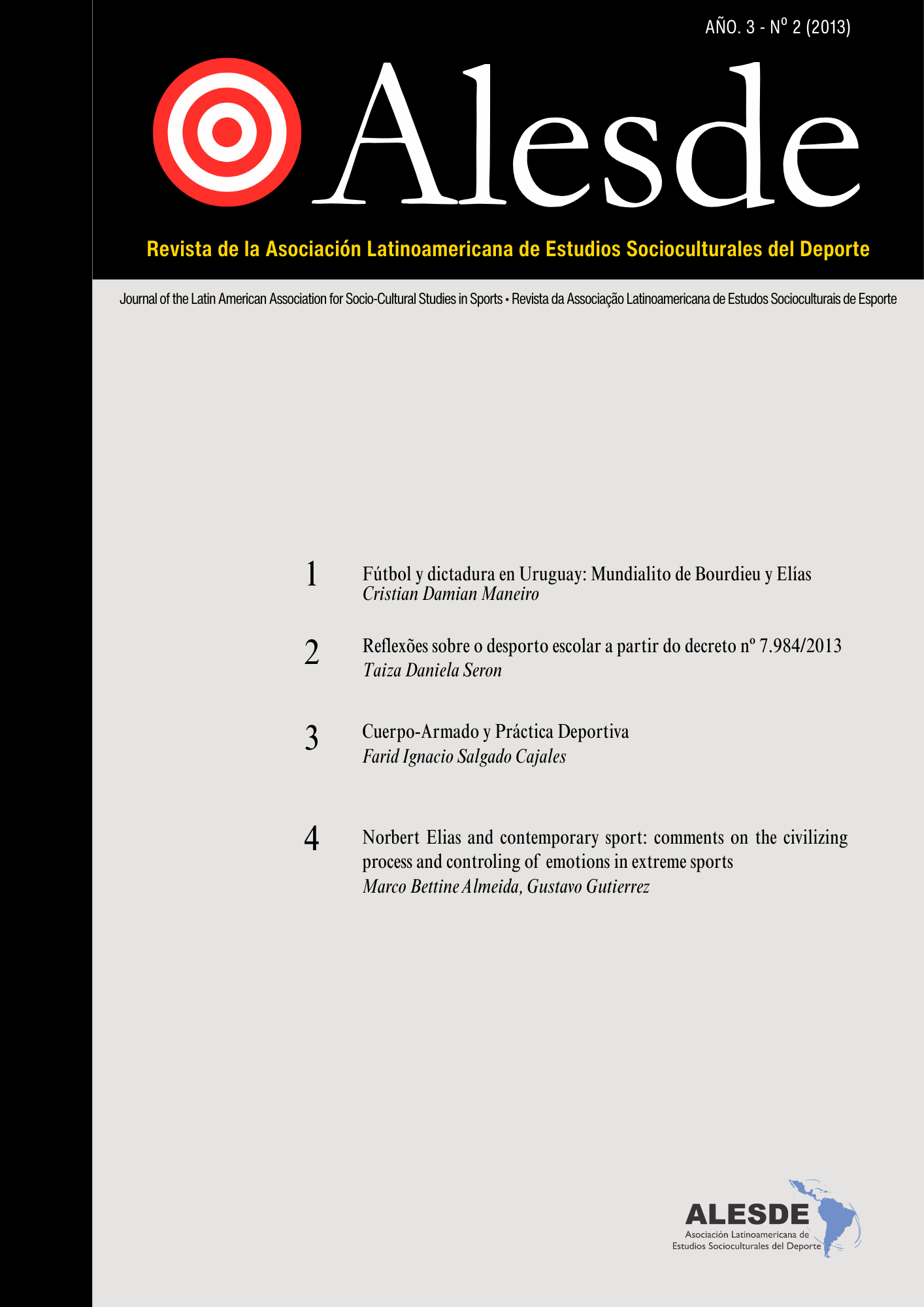
Norbert Elias e o esporte contemporâneo: comentários sobre o processo civilizador e controle das emoções em esportes radicais
DOI:
https://doi.org/10.5380/alesde.v3i2.32471Palavras-chave:
Esporte, Processo Civilizador, Esportes Extremos.Resumo
Neste estudo, objetivou-se ilustrar a relevância e originalidade de interpretar as atividades desportivas atuais, por exemplo, esportes radicais, a partir da avaliação de Norbert Elias sobre o processo civilizatório. Para construir esta reflexão, discutimos a busca de racionalidade no comportamento dos indivíduos, pensando-os dentro de uma lógica racional mais abrangente, inter-relacionados às teias sociais. Esporte no processo civilizatório, incluindo que as regras de conduta e sentimentos também são considerados como libidinais, controle dos impulsos afetivos, emocionais levou a uma evolução das regras sociais em todos os campos. O papel da emoção, disciplina, controle emocional no campo do esporte, enquanto uma área onde as expressões evidentes de sentimentos (que são restritos para o resto da vida social) são permitidos. O esporte é visto como canal para difundir mimesis, emoção e catarse. Consideramos o Esporte Radical como ação que busca a emoção e o descontrole controlado; o esporte vem do desenvolvimento da racionalidade, da tomada de decisões, das ações dos sujeitos e parte da complexidade das teias simbólicas.
Downloads
Como Citar
Edição
Seção
Licença
Autores que publicam nesta revista concordam com os seguintes termos:- Autores mantém os direitos autorais e concedem à revista o direito de primeira publicação, com o trabalho simultaneamente licenciado sob a Creative Commons Attribution License que permitindo o compartilhamento do trabalho com reconhecimento da autoria do trabalho e publicação inicial nesta revista.
- Autores têm autorização para assumir contratos adicionais separadamente, para distribuição não-exclusiva da versão do trabalho publicada nesta revista (ex.: publicar em repositório institucional ou como capítulo de livro), com reconhecimento de autoria e publicação inicial nesta revista.
- Autores têm permissão e são estimulados a publicar e distribuir seu trabalho online (ex.: em repositórios institucionais ou na sua página pessoal) após o processo editorial, já que isso pode gerar alterações produtivas, bem como aumentar o impacto e a citação do trabalho publicado (Veja O Efeito do Acesso Livre).