No. 7 (2025): Critical approaches to innovation and alternative policy models for innovation

					View No. 7 (2025): Critical approaches to innovation and alternative policy models for innovation

Organizers

Rafael de Brito Dias, State University of Campinas, Brazil

Carolina Bagattolli, Federal University of Paraná, Brazil


Presentation

In recent decades, innovation has achieved an extraordinary position in political, economic and cultural discourse. It has come to be seen as a universal remedy—a panacea capable of addressing social, environmental, economic and political challenges while simultaneously driving growth and competitiveness. As highlighted in the call for this thematic issue and as critically framed by several authors already, this belief rests on a powerful modern narrative: a fable of progress driven by science and technology, a promise that the future will inevitably be better than the present because innovation will carry us there. Yet this fable has obscured the social, political and environmental consequences of innovation systems designed around market logics, competition and technological determinism. It has eclipsed alternative imaginaries of collective flourishing and dismissed deeper questions about who benefits from innovation, who bears its risks, and what other futures might become possible.

In response, the field of Critical Studies of Innovation has emerged to interrogate these assumptions. Building on the foundational work of Godin, Vinck, Pfotenhauer and others, scholarship has exposed the ideological character of “innovationism” (Oliveira, 2011) —the belief that innovation is inherently good, that more is always better, and that societal problems are ultimately innovation deficits. The contributions gathered in this issue extend this critique, while also advancing conceptual and empirical foundations for alternative pathways. They address the contradictions of innovation regimes, expose the limits of ‘x-innovation’ (Gaglio et al., 2019) rebrandings, analyse the politics of governance and directionality, and foreground community-based, solidaristic and human-centred approaches that disrupt dominant models.

This issue has been deliberately structured to move from historical–epistemic critique, to sectoral and institutional analysis, to territorial experimentation, and finally to conceptual and methodological tools for rethinking innovation. Each article contributes a distinct lens, yet together they build a coherent argument: that the current innovation paradigm—rooted in neoliberalism, technological determinism and a narrow economic rationality—is neither inevitable nor desirable, and that viable, situated alternatives already exist, albeit often marginalised or invisible.
Published: 2025-12-17

Full Issue

Editorial

  • Editorial — Novation Forum II «Reimagining Innovation for the Public Good» — Reflections from the II NOvation Forum

    Carolina Bagattolli, Tiago Brandão, Lucien von Schomberg
    i-v
    DOI: https://doi.org/10.5380/nocsi.i7.102435
  • Editorial for the Thematic Issue Rethinking Innovation Beyond the Fable — Critical Pathways and Alternative Policy Models

    Carolina Bagattolli, Rafael de Brito Dias
    1-8
    DOI: https://doi.org/10.5380/nocsi.i7.102441

Articles

  • Modelling innovation as toxic (techno-economic) positivity Some consequences of SPRU’s attack on “The Limits to Growth”

    Ryan MacNeil
    9-36
    DOI: https://doi.org/10.5380/nocsi.i7.97375
  • Innovationism between Art and Technology Technological determinism in the controversy around Vantablack

    Yuri Gabriel Campagnaro
    37-63
    DOI: https://doi.org/10.5380/nocsi.i7.102426
  • Curation, Compliance, Consolidation Understanding the Limits of Innovation Policy’s Turn to Creativity

    Nadine O. Osbild, Sebastian Pfotenhauer
    64-90
    DOI: https://doi.org/10.5380/nocsi.i7.102427
  • Steering the Course Negotiating Directions in Alternative Research and Innovation Policies for Transformative Change

    Gabriela Bortz, Ayelén Gázquez
    91-123
    DOI: https://doi.org/10.5380/nocsi.i7.97466
  • Translating Transformative Innovation Framework in Colombia Governance Implications for STI Policy

    Nicolás Garzón Rodríguez, Janaina Pamplona da Costa
    124-142
    DOI: https://doi.org/10.5380/nocsi.i7.102428
  • Grassroots Innovation Ecosystems Alternative Agri-Food Networks (AAFNs) in Brazil and Turkey

    Theo Papaioannou, Les Levidow, Zühre Aksoy, Özlem Öz
    143-188
    DOI: https://doi.org/10.5380/nocsi.i7.102430
  • The Human and Social Factors of Technological Innovations Risks And Resources Analysis Model

    Eduard V. Patrakov, Rafael de Brito Dias, Rodrigo F. Frogeri, Lioudmila I. Baturina
    189-212
    DOI: https://doi.org/10.5380/nocsi.i7.98322

Reviews

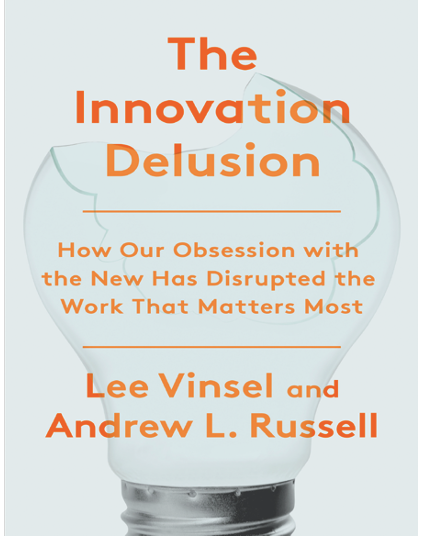
  • Critical Review of «The Innovation Delusion» How Our Obsession with the New Has Disrupted the Work That Matters Most (Vinsel & Russell, 2020)

    Tiago Brandão
    6
    DOI: https://doi.org/10.5380/nocsi.i7.102433
  • Critique, technology, and innovation An interview with Darryl Cressman

    Lisann Penttilä, Darryl Cressman
    24
    DOI: https://doi.org/10.5380/nocsi.i7.102438

Conference Proceedings

  • NOvation Forum II (2024) Reimagining Innovation for the Public Good

    NOvation Equipe editorial
    122
    DOI: https://doi.org/10.5380/nocsi.i7.102443